


Manhattan - Viani 250g | Colombia

Next day delivery available
Dispatch: 1–2 working days
Tracked serviceDispatch: Same working day if ordered before 12pm
Next working day expected, not guaranteedDispatch: Same working day if ordered before 12pm
Next working day expected, not guaranteedDispatch: Same working day if ordered before 3pm
Guaranteed service, subject to carrier termsOrders placed after the relevant cut-off, or at weekends, are dispatched the following working day. Working days exclude public and bank holidays. Dispatch estimates are subject to pre-order conditions.
View full delivery information ↗Free Click & Collect
Collection is available from our studio
1143 Pollokshaws Road, Glasgow G41 3YH
View full Click & Collect information ↗Couldn't load pickup availability
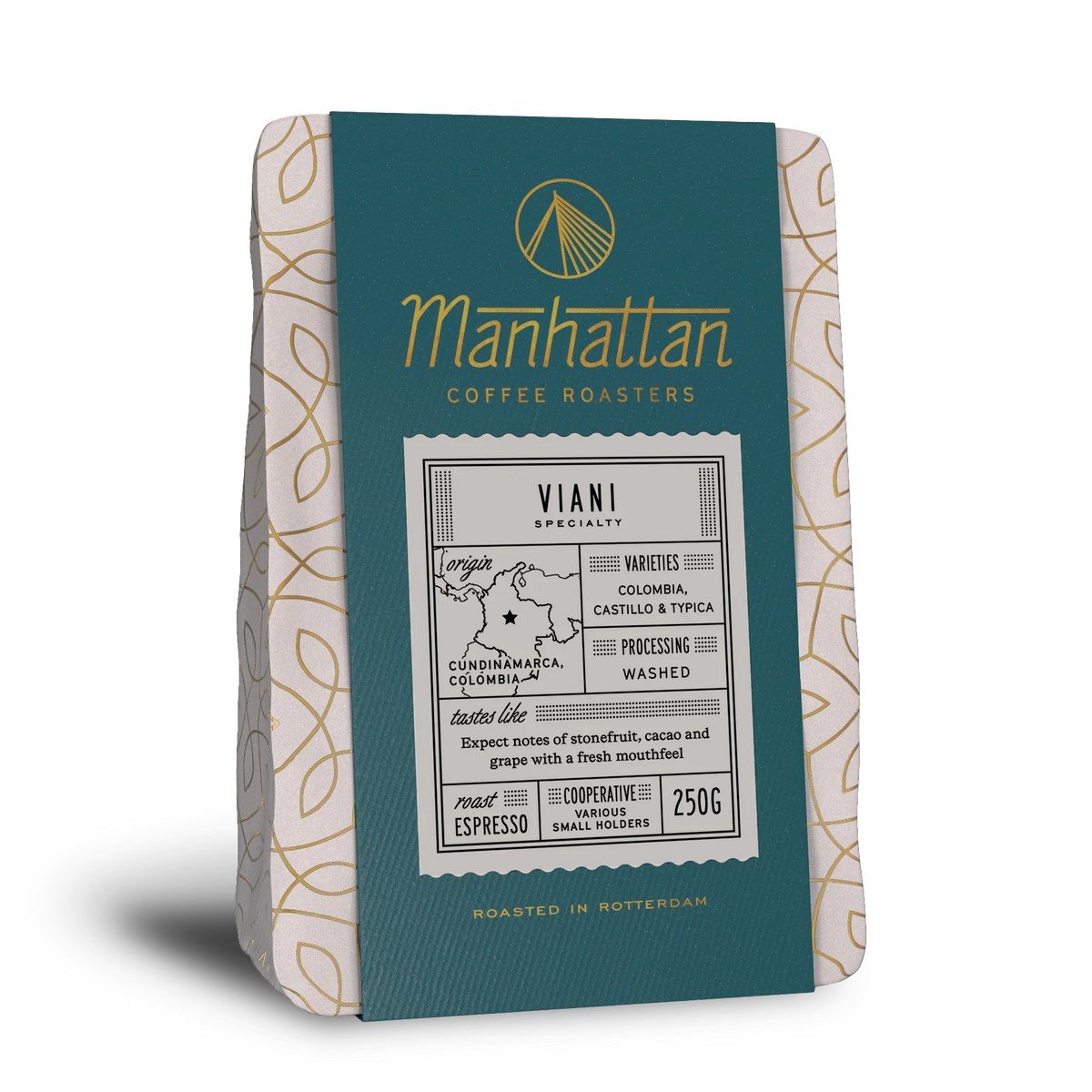
The co-operative in Viani produces a coffee with a traditional, old-world profile. It’s big, rich and has just a touch of acidity, making it perfect for anyone looking for an intense flavour experience.
We’ve been working with DR Wakefield and Racafé to improve the quality of this coffee, while ensuring that the producers are paid more for these improvements. The first step was introducing GrainPro bags, followed by an agreement to improve sorting and reduce the number of defects. Over time, these changes have significantly improved the coffee’s quality and, perhaps most importantly, increased the income of these smallholder farmers.
Viani is a small town in Cundinamarca, not too far from Bogotá — just a short drive away. The coffee we call “Viani” is sourced from more than 400 smallholder farmers across five municipalities, with the coffee delivered to three collection points.
The largest collection point, which accounts for around 70% of the coffee sold as “Viani”, is located in the town of Sierra and is run by Joseel. Farmers deliver both wet and dry parchment coffee here, and the site has a mechanical dryer.
When the parchment arrives, Joseel checks its quality, weighs the bags and agrees on a price with the farmer. Payment is made immediately in cash, and each farmer is given an empty bag to refill for their next delivery.
Joseel has worked with Racafé for more than 23 years and sells exclusively to Luis Fernando, Racafé’s manager in Bogotá. He delivers around 10,000–13,000 kg of coffee per trip.
Due to climate change, production has dropped significantly over the past few years, making it even more important to increase farmers’ income as harvests become smaller. Production in Viani is now down by 50% compared with two years ago. Rainfall has almost doubled, with rain falling nearly every day during the season.
Although rain is essential for coffee plants, they also need around two to three weeks of continuous sunshine without rain. This period of dry weather creates stress for the plants, encouraging them to reproduce. When the rain finally returns, the trees flower.
Most farmers contributing to “Viani” grow several crops alongside coffee, including plantain and avocado. Avocado trees provide shade for the coffee plants while also helping farmers diversify their income. During the pandemic, avocado prices dropped significantly, making income from coffee even more important.
When Esther visited the collection point in Sierra, a farmer named José Vicente Castiblanco arrived to deliver a bag of parchment coffee. He owns a four-hectare farm, of which only 0.65 hectares are dedicated to coffee. Most of his income comes from growing plantain.
Esther then visited three farms that contribute to “Viani”.
El Refugio — The Sanctuary
The first farm, El Refugio (meaning “The Sanctuary”), sits at 2,000 metres above sea level and covers six hectares. It grows Castillo and Tabi coffee varieties, alongside avocado.
The farm uses water from a spring for all its processing. The coffee is depulped on-site and fermented for 12–14 hours before being dried on covered raised beds.
After picking, the cherries are stored in a silo for 24 hours before being depulped the following day. This practice unintentionally creates a profile closer to a hybrid-washed process, as the coffee ferments overnight inside the whole cherry.
The owner, César Acosta, is currently planting Pink Bourbon seedlings. This variety, a mutation of Colombia, is resistant to leaf rust and is believed to have excellent cup quality, offering the potential to increase the farm’s revenue.
Finca Santa Rosa
The second farm, Finca Santa Rosa, covers five hectares at an altitude of 1,800 metres above sea level and grows mainly Castillo.
After depulping, the coffee is fermented in a silo without water for 12 hours. It is then demucilaged and washed using a minimal amount of water before being mechanically dried for 14 hours at 45°C. The dryer runs on cisco, a fuel made from coffee parchment waste.
Finca Campo Ermoso
The third farm, Finca Campo Ermoso, is owned by Ramiro Piraquive. The farm covers 23 hectares, primarily dedicated to cattle farming, with just one hectare planted with coffee. This area contains around 4,000 Castillo trees.
Looking ahead
With so many smallholder farms growing multiple crops, it’s easy to see how challenging it can be to improve quality across the entire supply chain. Each farm has different needs, and making meaningful improvements often requires investment at many different locations.
We’re now looking at the next steps we can take together to improve the quality of “Viani”. This could include investing in greenhouses, covers for raised drying beds and better processing equipment.
Our aim is to continue improving the coffee while ensuring that the farmers who produce it benefit from the extra value their hard work creates.


UK & International Delivery
We offer Royal Mail and courier services for fast UK and international delivery.
More info >Still need help? Contact us